Expertise across modalities

LC-MS bioanalysis built for the molecules driving innovation

We provide targeted LC-MS bioanalysis for a wide range of therapeutic modalities. Whether you’re working with small molecules, proteins or therapeutic peptides, our team develops approaches tailored to your analyte’s properties, matrix and study requirements.

Traditional analytes. Proven expertise.

Deep expertise in small molecule bioanalysis

From discovery through regulated studies, we provide high-sensitivity LC-MS/MS analysis optimized for small molecules. Our workflows are designed to support efficient timelines while delivering reliable, reproducible data for confident decision-making.

Key strengths include:​

  • Proven multiple reaction monitoring (MRM) methodology
  • Optimized sample prep and robust chromatographic separation
  • Flexible support for discovery through clinical phases
  • Experience with complex matrices and tight lower limit of quantification (LLOQ) requirements
small molecule bioanalysis
Bioanalysis of proteins
Advanced support for complex biologics

Bioanalysis of proteins and antibody-based therapeutics

Veloxity offers targeted support for protein-based therapeutics, including mAbs, ADCs and nanobodies. Our team develops and validates customized LC-MS workflows to meet the sensitivity, specificity and applicable regulatory needs of each program.

Our experience includes:

  • Monoclonal antibodies (mAbs)
  • Antibody-drug conjugates (ADCs)
  • Nanobodies
  • Hybrid LC-MS approaches as alternatives to ligand- binding assays (LBAs); Immunoaffinity workflows designed for preclinical species
Fast, focused support for peptide therapeutics

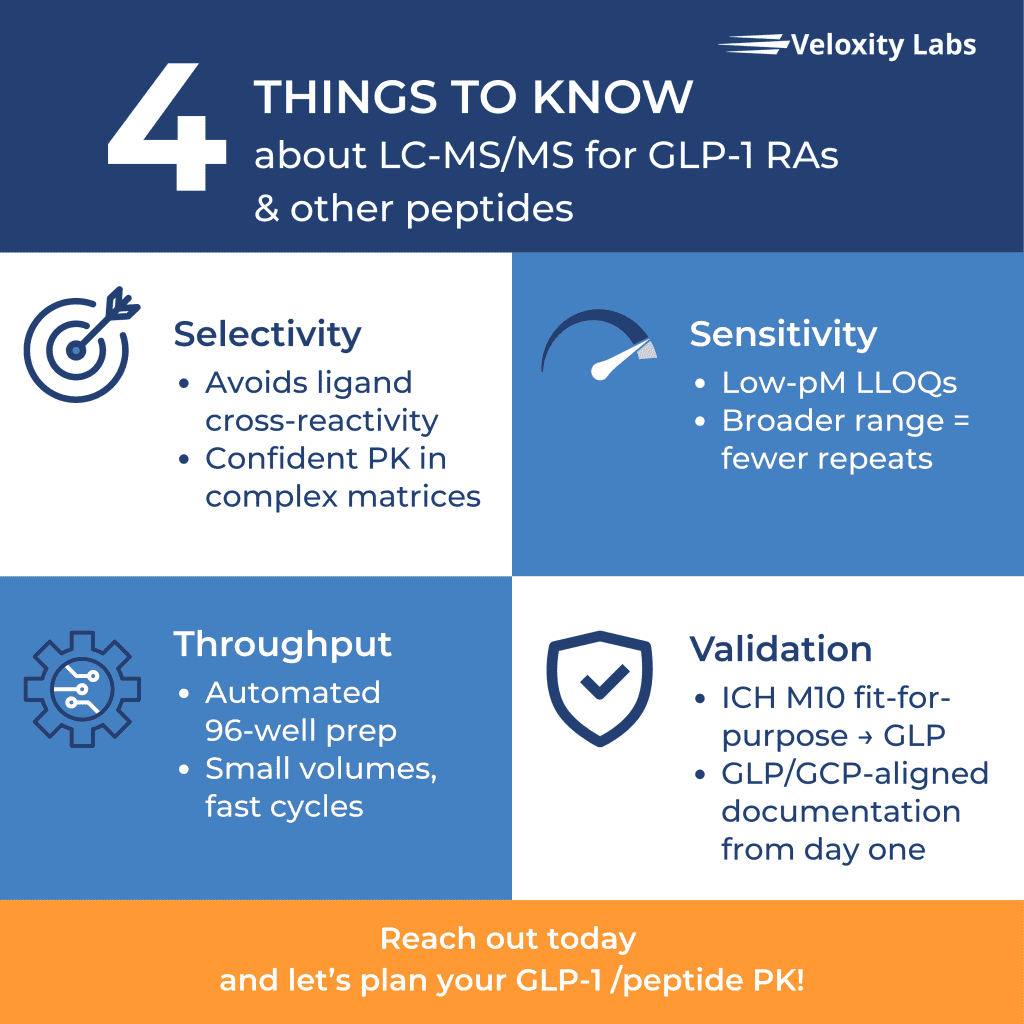
4 things to get right for GLP-1 LC–MS/MS

GLP-1 receptor agonists — and peptides more broadly — require LC-MS/MS methods designed for reliable PK data across complex matrices and development stages.

What matters most:

  • Selectivity — LC-MS/MS can reduce cross-reactivity concerns and support confident PK assessment in complex matrices
  • Sensitivity — Appropriate LLOQs and linear range help reduce repeats and unnecessary dilution
  • Throughput — Automated 96-well preparation and small-volume workflows can support efficient cycle times
  • Validation — Methods can be designed with ICH M10 expectations and later development stages in mind

Veloxity develops peptide-focused methods with the next development stage in mind, supporting continuity from fit-for-purpose work through GLP and clinical bioanalysis.

Tailored peptide bioanalysis
Peptide programs, accelerated

Tailored peptide bioanalysis for complex programs

Peptides present distinct challenges in sensitivity, selectivity, stability and sample preparation. Veloxity provides peptide-specific method development, fit-for-purpose qualification or validation and support for preclinical and clinical bioanalysis.

Capabilities include:

  • LC-MS/MS methods optimized for short-chain molecules
  • High-throughput or customized workflows
  • Matrix-specific strategies to maintain peptide integrity
  • Fit-for-purpose qualification based on study phase
Still relying on ELISAs for peptide bioanalysis?

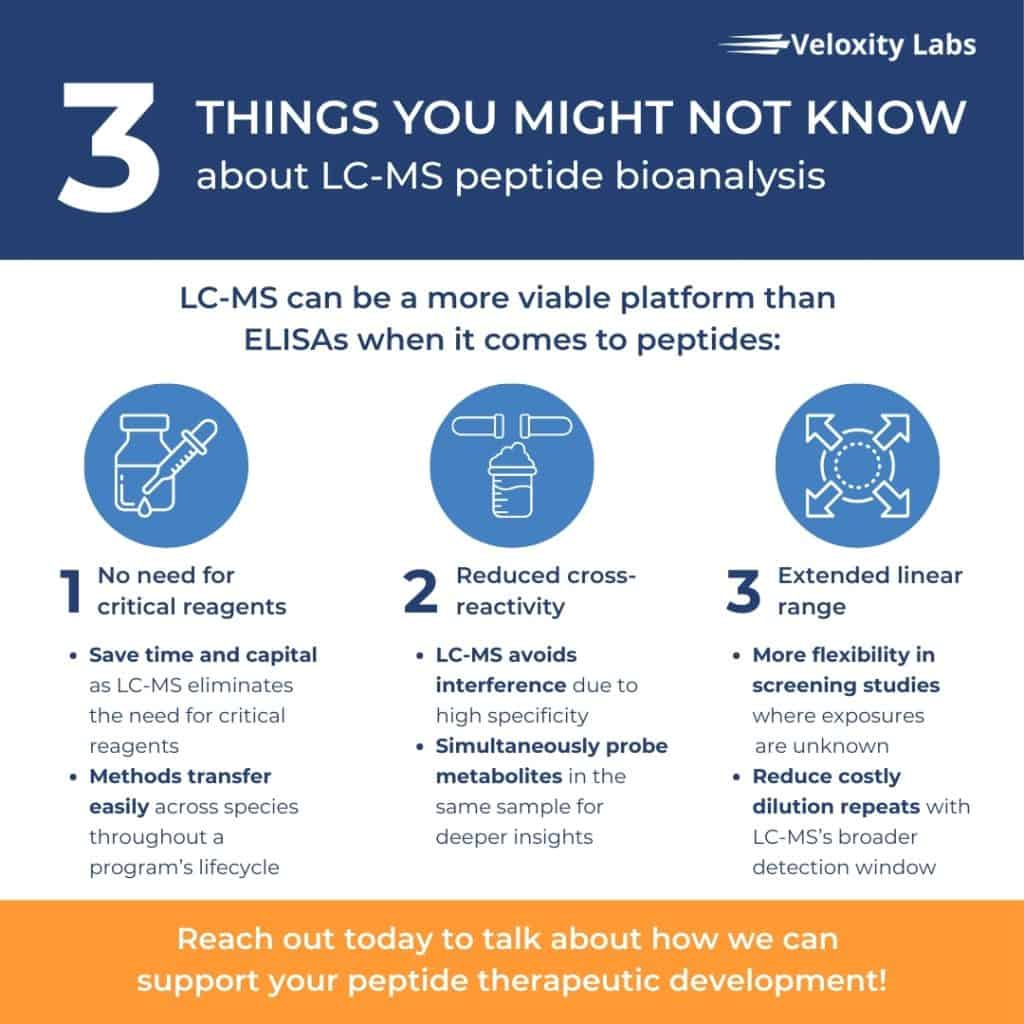
3 advantages of LC-MS for peptide bioanalysis

Depending on the analyte and study requirements, LC-MS can offer important advantages for peptide bioanalysis:

  • No critical reagents required
  • Reduced cross-reactivity concerns and greater
    multiplexing potential
  • Broad linear dynamic range
peptide bioanalysis
Flexible workflows for therapeutic platforms
Ready for what’s next

Flexible bioanalysis for evolving therapeutic modalities

We also support non-traditional and exploratory modalities that require customized bioanalytical approaches. When a program doesn’t fit a standard workflow, our scientists adapt method development and analysis to the molecule, matrix and study objectives.

Report

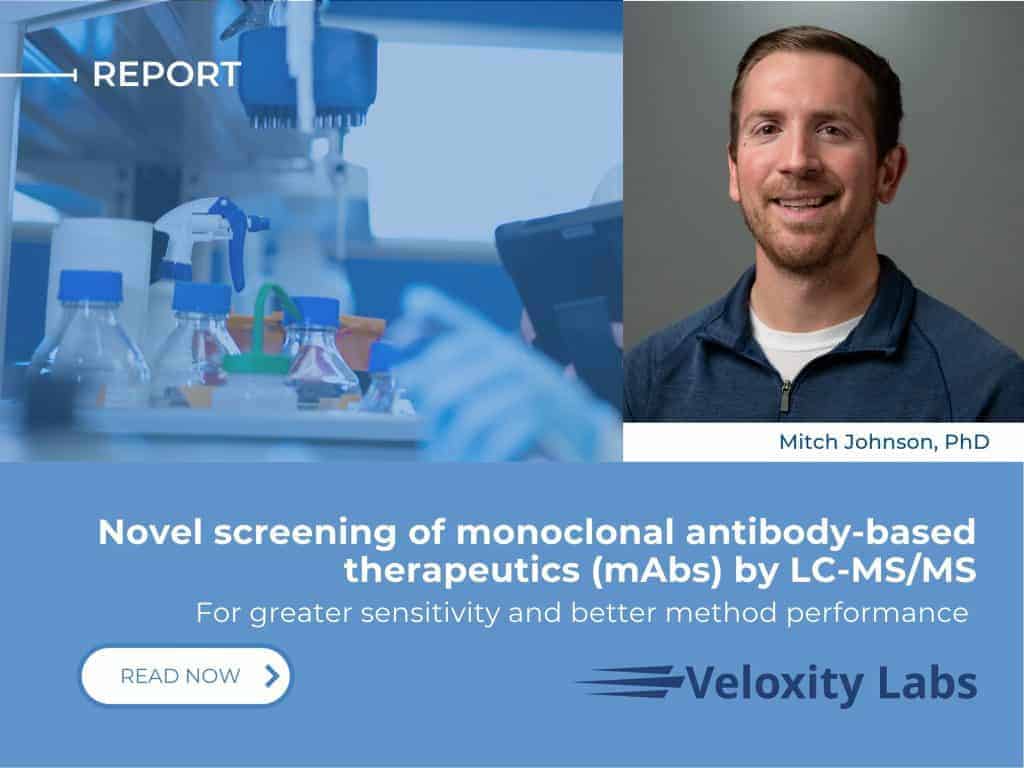
Novel screening of monoclonal antibody-based therapeutics

Explore a novel LC-MS/MS workflow for monoclonal antibody-based therapeutics designed to improve specificity, sensitivity and method performance. Download the report to learn how the approach can support more efficient bioanalysis of human IgG-based therapeutics.

Novel screening of monoclonal antibody-based therapeutics

Working with a complex therapeutic modality?

Talk with our scientists about the molecule, matrix, sensitivity requirements and development stage for your program.